
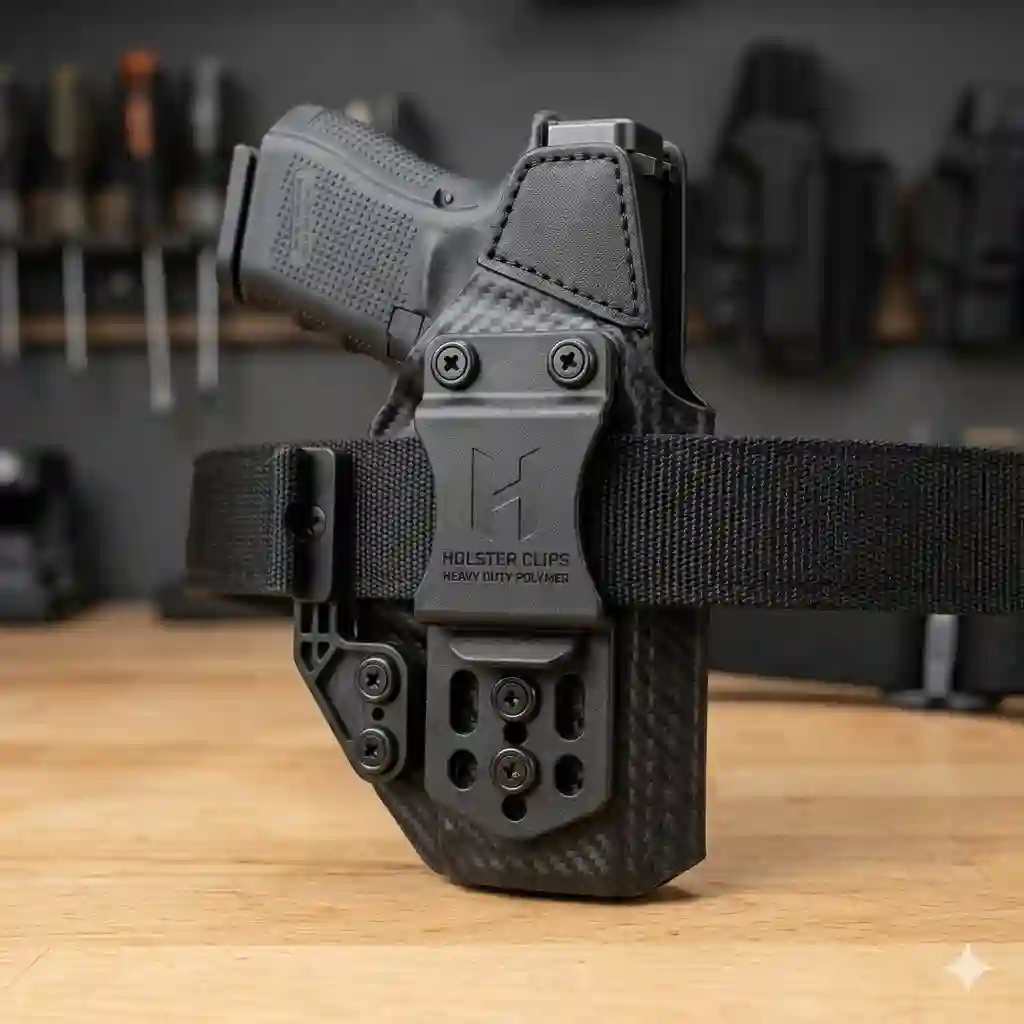
If there is one absolute truth I’ve learned after a decade of evaluating tactical gear, it’s this: your expensive, custom-molded Kydex rig is entirely useless if the hardware attaching it to your belt fails. Most beginners obsess over the firearm and the shell, completely ignoring the holster clips until they bend, snap, or let go during a draw stroke. I’ve seen it happen on the flat range, and worse, in real-world training scenarios.
What are holster clips? They are specialized retention brackets—typically crafted from spring steel, high-strength polymer, or injected composites—designed to anchor a firearm sheath securely to a belt or fabric waistline. The primary function is to ensure the weapon releases smoothly while the sheath remains firmly anchored to the user’s body.
But not all of these fasteners are created equal. The difference between a cheap injection-molded plastic tab and a heat-treated 10XX steel alloy clip is profound. One merely rests on your belt; the other clamps onto it with enough force to require a deliberate, practiced motion to remove. In this comprehensive guide, we are bypassing the generic marketing fluff. I will break down exactly which hardware survives daily abuse, which materials tear up your car seats, and how to select the exact retention system for your specific carry style. Let’s dive into the hardware that actually matters.
Quick Comparison Table: Top Hardware Evaluated
| Product Model | Material | Optimal Belt Size | Best For | Clamp Force |
| UltiClip XL | 1075 Spring Steel | Beltless / Up to 1.5″ | Gym shorts, yoga pants | Extreme |
| Discreet Carry Concepts Mod 4 | 10XX Alloy Steel | 1.5″ | Low-profile EDC | Very High |
| HolsterSmith FOMI | Polymer | 1.5″ or 1.75″ | Budget replacements | Moderate |
| HolsterBuilder Tough | Heavy-Duty Polymer | 1.5″ | OWB/Heavy IWB | High |
| Tulster IWB Metal | Spring Steel | 1.5″ | Minimalist carry | High |
The data above reveals a stark divide in the market between convenience and security. While polymer options like the HolsterSmith FOMI offer adequate retention for standard 1.5-inch gun belts, they simply cannot match the mechanical bite of the steel alloys used by DCC and UltiClip. If your primary wardrobe involves beltless attire—like sweatpants or scrubs—the UltiClip XL is structurally unmatched, though it requires more maintenance to prevent rust. Conversely, traditional belt wearers seeking zero printing will find the DCC Mod 4’s hyper-thin profile justifies its higher cost.
💬 Just one click — help others make better buying decisions too! 😊
[addtoany]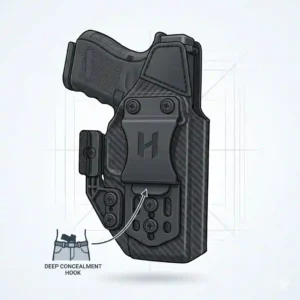
Top 5 Holster Clips — In-Depth Field Analysis
1. UltiClip XL: The Beltless Champion
The UltiClip XL is engineered specifically to eliminate the need for a traditional gun belt by clamping directly onto fabric waistbands or thick belts with a locking mechanical lever. Manufactured from 1075 spring steel and featuring a multi-hole mounting bracket, this isn’t just a hook; it’s a jaw. In my field tests, this means you can secure a compact firearm to thin gym shorts without the entire rig pulling loose on the draw. Most factory hardware requires the rigidity of a 1.5-inch leather belt to function, making the UltiClip XL a massive leap forward for deep concealment in casual clothing.
I strongly recommend this model for runners, medical professionals in scrubs, or anyone living in hot climates where heavy belts are impractical. However, that extreme clamping force comes with a caveat: the steel teeth can and will fray delicate fabrics over a 12-month cycle of daily use. Customers rave about its unwavering grip, frequently noting that it completely revolutionized their summer carry options, though a few mention the locking tab can be stiff initially.
-
Pros: Phenomenal beltless retention, multi-angle cant adjustment, low profile.
-
Cons: Can damage thin fabrics over time, requires deliberate effort to unlock.
-
Price Range & Value: Sitting in the $15-$25 range, it offers unmatched ROI for those needing versatile mounting options.
2. Discreet Carry Concepts HLR Gear Clip (Mod 4): The Professional’s Choice
When top-tier Kydex benders upgrade their flagship products, they reach for the Discreet Carry Concepts HLR Gear Clip (Mod 4). Stamped from a proprietary 10XX steel alloy and finished with a non-reflective, rust-resistant coating, this hardware offers an astonishingly thin profile. What the spec sheet won’t tell you is that this thinness drastically reduces the “belt bulge” that causes printing through a t-shirt. Because the steel is heat-treated to a specific Rockwell hardness, it flexes just enough to slip over a 1.5-inch belt but bites aggressively into the underside, completely negating the risk of the sheath coming out with the gun.
In my experience, this is the gold standard for inside-the-waistband (IWB) carry. It is explicitly for the user who demands absolute security and maximum concealment, though it is unapologetically punishing on cheap leather belts. Buyers consistently praise its “grab-and-forget” reliability, while some novices find it frustratingly difficult to remove at the end of the day.
-
Pros: Impossibly thin, aggressive under-belt bite, premium corrosion resistance.
-
Cons: Will scratch soft leather belts, difficult to remove single-handedly.
-
Price Range & Value: Typically found in the $10-$20 range per unit, it is worth every penny for serious EDC practitioners.
3. HolsterSmith FOMI Clip: The Industry Standard
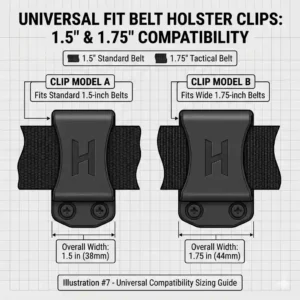
The HolsterSmith FOMI Clip (Fold Over Molded Injection) is the quintessential bracket found on perhaps 70% of factory rigs on the market today. Injection-molded from durable polymer and available in exact 1.5-inch or 1.75-inch variants, its simplicity is its selling point. From a practical standpoint, the polymer construction means zero rust, zero scratching on your vehicle’s steering wheel if you brush against it, and effortless donning and doffing. It flexes easily, allowing you to clip it over your belt with a satisfying “snap” that confirms it’s seated.
I advise keeping a pack of these in your parts bin. They are best suited for budget-conscious buyers, DIY holster makers, or casual carriers who prioritize comfort and ease of use over extreme retention. The downside? Polymer fatigues. After 18-24 months of daily use, I’ve noticed FOMI clips lose their spring tension, becoming loose on the belt. Feedback is overwhelmingly positive regarding the ease of installation, though hardcore users correctly point out its limitations in physical scuffles.
-
Pros: Will not rust, won’t scratch belts/furniture, very affordable.
-
Cons: Polymer stretches over time, lacks the aggressive bite of steel.
-
Price Range & Value: A steal in the under-$10 range, making it the perfect budget replacement part.
4. HolsterBuilder Tough Clip: The Heavy-Duty Alternative
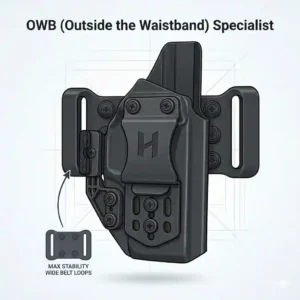
If you love the non-marring properties of polymer but hate how flimsy standard FOMI styles can feel, the HolsterBuilder Tough Clip bridges that gap. Molded from an ultra-dense polymer blend with reinforced stress points, this hardware is noticeably thicker. The dual pre-drilled holes allow for rock-solid two-point mounting, which translates to zero pivot or shifting throughout the day. When you torque down the Chicago screws on this model, your rig stays exactly at the cant angle you set—something single-screw designs constantly struggle with.
This is the ideal upgrade for anyone carrying a heavier, full-sized firearm inside the waistband. The added thickness does introduce a slight printing risk under tight clothing, but for an open-carry (OWB) to IWB convertible rig, it provides fantastic stability. Reviews often highlight its “beefy” construction, with many users noting it survived snags that broke their factory plastic brackets.
-
Pros: Extremely rigid for polymer, dual mounting holes prevent shifting, lifetime durability.
-
Cons: Bulkier than steel options, may cause slight printing.
-
Price Range & Value: Hovering in the $10-$15 range, it offers exceptional structural integrity for heavy firearms.
5. Tulster IWB Metal Clip: The Minimalist’s Upgrade
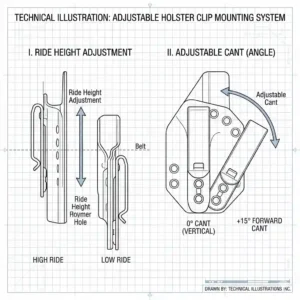
The Tulster IWB Metal Clip offers a sleek, no-nonsense approach to retention. Crafted from spring steel with a black oxide finish, it features an elongated mounting slot rather than fixed holes. This is a critical design choice because it allows for infinite, micro-adjustments to ride height and cant angle. In practice, this means if your firearm grip is digging into your ribs, you can loosen the screw, slide the bracket down an eighth of an inch, and instantly solve an ergonomic nightmare that fixed-hole hardware forces you to endure.
I match this product with carriers who are highly particular about their draw mechanics. It offers a much stronger grip than polymer without the fabric-shredding aggression of some tactical alloys. However, the black oxide finish requires occasional oiling; otherwise, summer sweat will introduce surface rust. Customer feedback frequently praises the smooth edges and easy adjustability, though a few mention the need for threadlocker to keep the sliding slot locked down tight.
-
Pros: Infinite ride-height adjustability, strong spring tension, sleek profile.
-
Cons: Finish requires rust-preventative maintenance, single-screw design can pivot if not tight.
-
Price Range & Value: Usually priced in the $10-$15 range, it is an elegant, highly customizable upgrade.
✨ Don’t Miss These Exclusive Deals!
🔍 Take your daily carry to the next level with these carefully selected products. Click on any highlighted item to check current pricing and availability. These tools will help you create authentic, secure retention solutions you can trust with your life!
Step-by-Step Installation & Usage Guide
Replacing or upgrading your retention hardware seems straightforward until your entire rig falls apart in a public restroom because you skipped a vital step. Here is my first-hand, road-tested process for installing new holster clips to ensure they never fail.
Step 1: The Hardware Purge
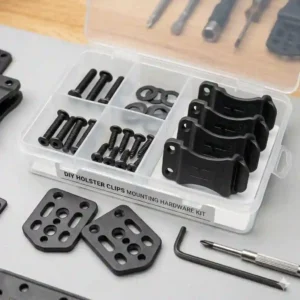
Never reuse old Chicago screws or rubber spacers. When you buy a premium bracket like the Discreet Carry Concepts Mod 4, use the fresh hardware provided. Old screws often have stripped threads or compressed rubber washers that no longer provide adequate friction.
Step 2: Dry Fitting and Angle Adjustment
Attach the bracket loosely. Put on your typical everyday gun belt and mount the unloaded firearm. Walk around, sit in your car, and bend over. This is where the slotted design of the Tulster IWB Metal Clip shines. Adjust the cant (angle) until you can achieve a full firing grip without contorting your wrist.
Step 3: The Loctite Mandate
This is the most critical step. Once you find your perfect angle, remove one screw at a time and apply a single drop of blue Loctite 242 (never red). Tighten the screw until the rubber spacer slightly bulges, then stop. Over-torquing will crack Kydex and strip the metal posts.
Step 4: The 30-Day Maintenance Check
The biggest mistake beginners make is trusting the hardware blindly. After 30 days of body heat, friction, and movement, the screws will try to back out. Check your torque specs monthly. A quick visual inspection can prevent a catastrophic retention failure.
The Commuter vs. The Active Carrier Case Study
To truly understand how hardware impacts your daily life, let’s look at two distinct profiles and why perfect products fail in the wrong environment.
Profile A: The Office Commuter
John drives 45 minutes to work, sits at a desk for 8 hours, and wears slacks with a woven belt. He initially bought the aggressive DCC Mod 4. The result? The steel bit into his belt so fiercely that he couldn’t adjust the rig while seated, and the sharp steel edge dug into his leather car seats during his commute.
The Fix: John switched to the HolsterSmith FOMI Clip. The smooth polymer allowed him to slide the rig slightly to the 4 o’clock position while driving without destroying his upholstery, and it was easy to remove when locking his firearm in the car safe before entering a restricted building.
Profile B: The Active Carrier (Gym/Running)
Sarah carries a micro-compact firearm daily but exclusively wears yoga pants and running shorts without belt loops. She tried a standard polymer FOMI bracket, which constantly slid up and threatened to fall out during jogs.
The Fix: Sarah installed the UltiClip XL. By clamping directly onto the reinforced waistband of her athletic wear, the mechanical lock ensured the sheath stayed cemented to her hip, even during high-movement sprints, proving that specialized use-cases require specialized engineering.
How to Choose the Right Hardware for Your Gear
Selecting the proper attachment mechanism isn’t about buying the most expensive item; it’s about matching the engineering to your biological geometry and wardrobe.
1. Assess Your Belt Infrastructure
If you run a reinforced, 1.5-inch nylon rigger’s belt, aggressive steel brackets will excel. However, if you rely on department store dress belts, stiff steel will warp the leather within weeks. You must pair rigid hardware with rigid belts, or rely on clamping designs like the UltiClip for beltless carry.
2. Evaluate Concealment Priorities
Every millimeter of thickness on your attachment bracket pushes the firearm’s grip further away from your body. If you wear fitted clothing, the bulky profile of a heavy-duty polymer bracket will print (show the outline). In these cases, ultra-thin steel alloys are mandatory for stealth.
3. Single vs. Double Point Mounting
Single-clip designs allow the holster to pivot slightly with your body as you walk, which improves comfort. However, this pivoting can change the angle of your draw under stress. Double-clip designs (like hybrid holsters) spread the weight over a wider area and lock the cant angle in permanently. Choose single for comfort, double for consistency.
Common Mistakes When Upgrading Your Hardware
Even experienced carriers fall victim to a few pervasive myths when modifying their gear. Here is the expert commentary on pitfalls to avoid.
Ignoring the Spacer Compression
Most holster clips come with rubber washers (spacers) that sit between the bracket and the Kydex shell. I see users routinely cranking down the screws until these washers are flattened into pancakes. This destroys the shock-absorbing properties of the rubber and transfers all kinetic stress directly to the brittle Kydex, leading to microscopic stress fractures and eventual shell failure. Tighten until snug, not until crushed.
The “One Size Fits All” Delusion
Attempting to put a 1.75-inch bracket on a 1.5-inch belt is a recipe for disaster. That quarter-inch of vertical play allows the sheath to slide upward during the draw stroke. By the time the bracket hits the top edge of the belt to provide resistance, your draw is botched, and the firearm is bound up in the shell. Always perfectly match the bracket size to your belt width.
Neglecting Finish Maintenance
Steel is fantastic, but sweat is highly corrosive. If you carry against bare skin in July, high-carbon steel hardware will rust. A common mistake is assuming the black factory finish is impervious. I highly recommend wiping down metal hardware weekly with a light coat of CLP (Clean, Lubricate, Protect) to maintain structural integrity and prevent unsightly orange staining on your shirts.
Polymer vs. Spring Steel: Which Material Actually Survives?
The debate between polymer and metal retention systems has raged on industry-leading gun blogs and tactical forums for years. The reality is far more nuanced than “steel is stronger.”
The Case for Advanced Polymers
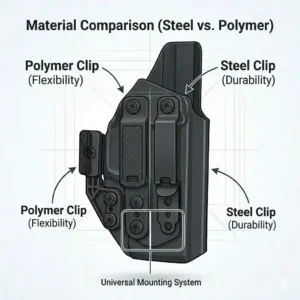
Modern injection-molded plastics, like the nylon blends used in the HolsterBuilder Tough Clip, possess incredibly high impact resistance. Their superpower is “memory.” If you snag a polymer bracket on a doorframe, it will bend drastically and then snap back to its original shape. Furthermore, it will never corrode, making it the superior choice for maritime environments or extremely heavy sweaters.
The Case for Heat-Treated Steel
Steel brackets win on sheer clamping force and tensile strength. Because steel is inherently stronger, manufacturers can make the brackets substantially thinner while maintaining a higher retention grip than polymer. However, steel lacks “memory.” If you bend a steel bracket past its yield point by catching it on a steering wheel, it will remain bent. You have to physically pry it back, which weakens the metal. For urban, everyday carry where ultimate concealment is paramount, steel is king. For rugged, outdoor, or overt applications, heavy polymer often survives longer.
What to Expect: Real-World Performance Over 12 Months
The spec sheet is a snapshot; real life is a marathon. Here is the “Year One” roadmap for what happens to your retention gear.
Months 1-3: The Break-In Period
Initially, both steel and polymer will feel incredibly stiff. You may struggle to get the rig onto your belt. Do not manually bend the tabs to loosen them. Allow the natural friction of daily wear to subtly smooth out the microscopic burrs on the hardware.
Months 4-8: The Sweat Toll
By month six, the rubber spacers will begin to dry out, and you will notice your screws loosening more frequently. This is when the Loctite application I mentioned earlier saves your rig. If you are using steel hardware, the edges that rub against your pants will start showing bare metal as the oxide finish wears off. This is normal but requires vigilance against rust.
Months 9-12: The Fatigue Point
Approaching a year, polymer clips like the FOMI will have lost about 10% of their spring tension. They will slide onto the belt easier, but they will also slide off easier. Assess the retention by attempting to draw the firearm rapidly with an unloaded gun. If the sheath moves upward more than a quarter-inch, it is time to spend $15 and replace the hardware. Treat holster clips like car tires; they are wear items that require periodic replacement.
✨ Don’t Miss These Exclusive Deals!
🔍 Upgrade your loadout before your current hardware fails. Click on any highlighted item above to check current pricing and secure your replacement parts today. Staying prepared means staying ahead of wear and tear!
The Final Verdict on Retention Hardware
Your life-saving equipment is only as robust as its weakest point of failure. While it is tempting to spend hundreds on optics and trigger jobs, neglecting the small piece of material that connects that system to your body is a critical oversight. As we’ve explored, the transition from generic factory plastics to purpose-built, high-strength hardware like the Discreet Carry Concepts Mod 4 or the fabric-locking UltiClip XL fundamentally alters how comfortable and secure your daily carry will be.
Remember, there is no magic solution. Assess your wardrobe, evaluate your belt rigidity, and recognize that hardware requires maintenance. Replace your polymer brackets when they stretch, oil your steel to prevent rust, and always lock down your screws. Stop treating your holster clips as an afterthought, and start treating them as the vital anchor point they truly are.
FAQs
❓ What are the best holster clips for sweatpants?
✅ The UltiClip XL is universally recognized as the best option for beltless carry. Its mechanical locking lever clamps directly onto the fabric of sweatpants or gym shorts, providing a secure draw without needing a rigid gun belt…
❓ How do I stop my holster screws from coming loose?
✅ Apply a single drop of blue Loctite 242 (threadlocker) to the threads of your Chicago screws before tightening. Avoid red Loctite, as it is permanent and will require a blowtorch to remove without destroying the Kydex…
❓ Can you replace the clips on any Kydex holster?
✅ Most modern Kydex holsters use standard mounting hole spacing (typically 0.60 inches apart). However, always measure the distance between your current screw holes before purchasing aftermarket hardware to ensure compatibility with your specific shell…
❓ Do metal clips scratch leather seats?
✅ Yes, bare steel or aggressively shaped alloy brackets can easily scratch soft leather car seats or wooden dining chairs if you brush against them. If this is a concern, opt for smooth, injection-molded polymer hardware instead…
❓ Are tuckable holster clips worth it?
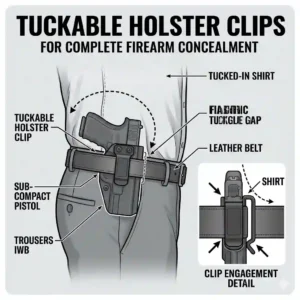
✅ Absolutely. Tuckable designs feature a gap between the mounting point and the belt loop, allowing you to tuck a dress shirt over the firearm and behind the clip. This renders the weapon completely invisible, exposing only the small bracket on your belt…
Recommended for You
- Fixed Blade Sheath: 7 Best Rugged Options to Protect Your Gear
- Tool Pouch Clip: 7 Must-Have Clips for Better Tool Organization in 2025
- 7 Best Leather Knife Holster Options for 2026: Expert EDC Guide
Disclaimer: This article contains affiliate links. As an Amazon Associate, I earn from qualifying purchases. If you purchase products through these links, we may earn a small commission at no additional cost to you.
✨ Found this helpful? Share it with your friends! 💬🤗
[addtoany]
