
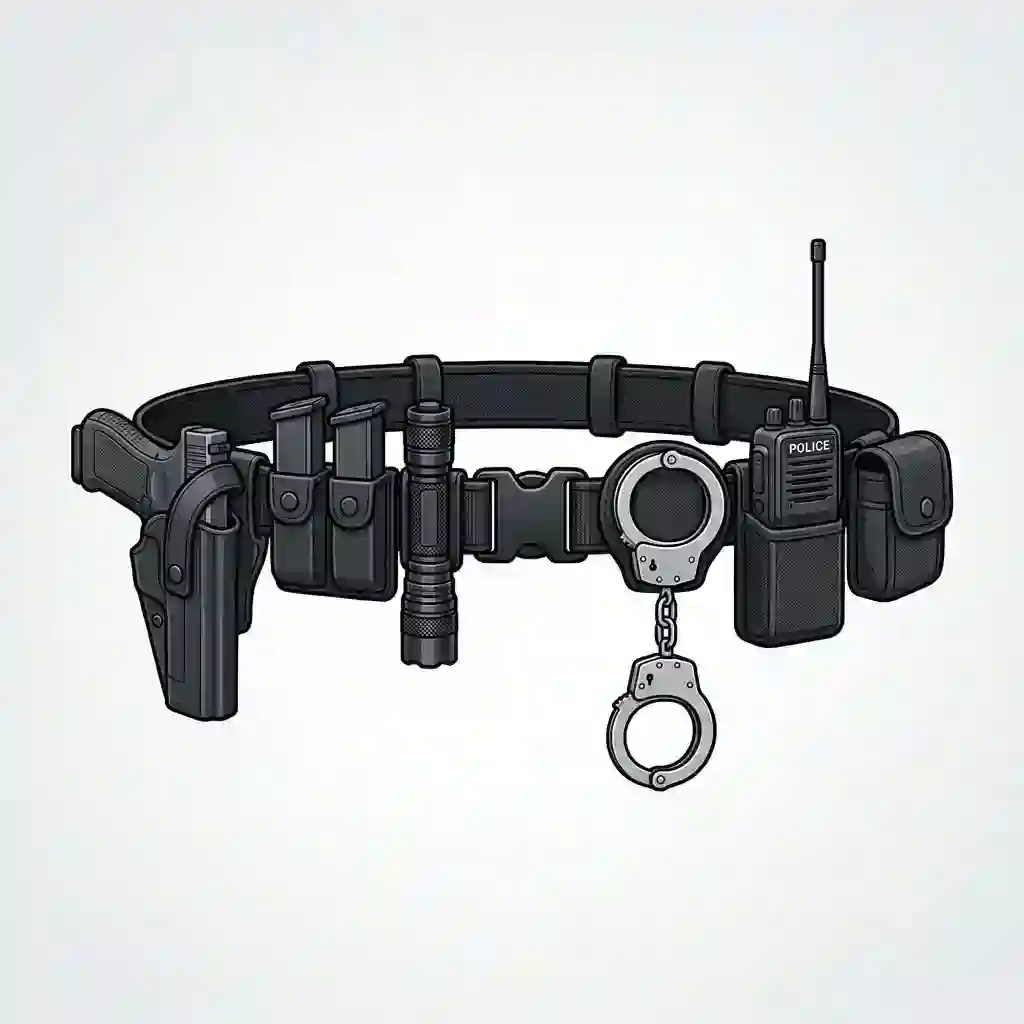
If you have spent any amount of time in law enforcement, private security, or tactical operations, you already know that your gear can make or break your shift. What is a duty belt without its components? Simply put, duty belt accessories are the modular attachments—ranging from handcuff cases and baton holders to specialized key rings and magazine pouches—that attach to a primary 2-inch or 2.25-inch tactical belt. These components are designed to securely carry essential life-saving and administrative tools, ensuring they are instantly accessible while maintaining strict retention during physical altercations.
When I first started out over a decade ago, I made the rookie mistake of buying the cheapest gear I could find. I quickly learned that when you are twelve hours into a grueling shift, carrying 15 to 20 pounds of gear around your waist, every ounce and every snap matters. Poorly designed duty belt accessories don’t just cause lower back fatigue; they present a critical safety liability if a pouch fails to retain its contents during a foot pursuit.
In this comprehensive guide, I am going to walk you through the exact loadout components I trust. We will go beyond the standard manufacturer specification sheets to look at how these items actually perform in the rain, mud, and high-stress scenarios of 2026. Whether you are a seasoned veteran looking to modernize your aging leather rig or a fresh academy graduate setting up your first loadout, optimizing your belt is the first step toward a safer, more efficient shift.
Quick Comparison: Top Duty Belt Upgrades
| Product Model | Best For | Key Material | Estimated Price Range |
| Safariland 7904 AccuMold Elite | Standard Handcuffs | Trilaminate Synthetic | $25 – $35 |
| Zak Tool ZT55 Stealth | Rapid Key Access | Carbon Steel / Polyurethane | $15 – $20 |
| Bianchi 7906 Belt Keepers | Securing Inner/Outer Belts | Ballistic Nylon | $12 – $18 (4-Pack) |
| 5.11 Tactical Sierra Bravo | Medical / Utility Storage | 1680D Nylon | $20 – $30 |
| Uncle Mike’s Sentinel OC Pouch | Pepper Spray Retention | Molded Foam / Nylon | $18 – $25 |
Looking at the comparison above, the Safariland 7904 delivers the best value for daily handcuff retention, but if quick access to keys is your primary bottleneck, the Zak Tool ZT55’s specialized spring clip justifies its spot on your rig. Budget-conscious professionals should note that while the Bianchi Belt Keepers are inexpensive, they are arguably the most structurally critical component for weight distribution, making them a non-negotiable upgrade.
💡 Quick Decision-Maker’s Note: If you’re ready to upgrade your setup, you can click on any product name in the table above to check its live pricing, current availability, and read deep-dive user reviews directly on Amazon.
[addtoany]
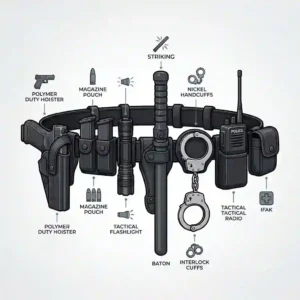
Top 5 Duty Belt Accessories: Expert Analysis
1. Safariland 7904 AccuMold Elite Covered Handcuff Case
The Safariland 7904 AccuMold Elite Covered Handcuff Case is a masterclass in synthetic durability. The manufacturer lists its material as a “trilaminate synthetic with a leather-like finish.” In practical terms, this means you get the professional, high-gloss or basketweave aesthetic required by strict uniform codes, but with the weather-impervious nature of polymer. You can stand in a torrential downpour for four hours, and unlike traditional leather, this case won’t swell, warp, or retain water. The hidden snap closure is designed to defeat quick-snatch attempts, requiring a deliberate, directional pull to open.
In my field tests, what surprised me most during use was how the AccuMold construction maintains its shape even when empty. Cheaper nylon pouches collapse, requiring two hands to re-holster your cuffs after an arrest. With the 7904, the pouch stays rigid. I highly recommend this specific model for patrol officers who frequently transition in and out of squad cars, as the contoured design minimizes digging into your lower back. The only drawback is the break-in period; the directional snap is notoriously stiff for the first two weeks.
Most community reviewers praise its professional look and longevity, often citing cases that have survived 5+ years of daily abuse. Sitting in the mid-$20 to $30 range, it bridges the gap between budget nylon and premium leather perfectly. It’s an investment in muscle memory—you will always know exactly how much pressure it takes to deploy your cuffs.
-
Pros: Retains shape when empty, professional leather look without the maintenance, excellent directional snap retention.
-
Cons: Stiff break-in period, slightly bulkier than open-top Kydex variants.
2. Zak Tool ZT55 Tactical Stealth Key Ring
The Zak Tool ZT55 Tactical Stealth Key Ring might look like a simple piece of bent metal, but it solves one of the most frustrating micro-problems in duty work: key management. Built from carbon steel and coated in a black polyurethane finish, the specs boast a 200-pound pull strength. What this means for you on the street is that no matter how hard you catch your keys on a steering wheel or a chain-link fence, this clip will not bend or drop your ring. The “Stealth” in the name refers to the polymer coating, which eliminates the annoying metallic jingle of keys slapping against a steel clip.
As someone who has fumbled with traditional leather key straps during high-stress moments, I found the ZT55 to be an absolute game-changer. You can deploy your handcuff keys blindly with one hand using a simple upward sliding motion. It is tailored specifically for first responders who need instant, eyes-free access to patrol car keys and cuff keys. The spec sheet won’t tell you this, but you need to make sure your belt is exactly 2.25 inches thick; if you use a thinner rig, the clip will slide horizontally during a run.
Customer feedback consistently highlights its reliability, with many noting they’ve transferred the same Zak Tool clip across three different duty belts over a decade. For under $20, it is the highest ROI accessory on this list. It eliminates the “key jingle” that can give away your position and streamlines your entire workflow.
-
Pros: Silent operation, one-handed blind deployment, indestructible carbon steel core.
-
Cons: Can slide on belts thinner than 2.25 inches, metal keys can still scratch the polymer coating over time.
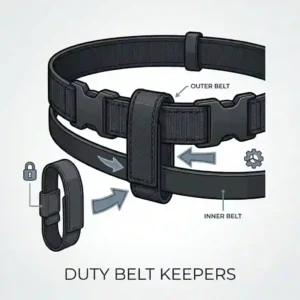
3. Bianchi 7906 Belt Keeper (4-Pack)
The Bianchi 7906 Belt Keepers are the unsung heroes of tactical loadouts. Constructed from ballistic nylon with dual hidden snaps, these straps are designed to lock your heavy outer gear belt securely to your inner trouser belt. The specification of “dual snaps” is critical here. If you find yourself in a ground altercation, a single-snap keeper can pop open under twisting pressure. The dual-snap architecture ensures that even if one snap fails, the second maintains structural integrity, preventing your gear from riding up into your ribs.
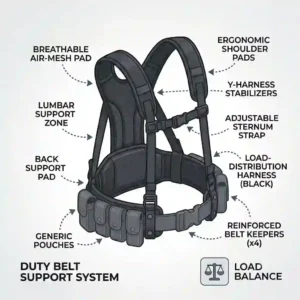
In my experience, what most buyers overlook about keepers is their role in injury prevention. Before I switched to the Bianchi 7906s, I used cheap, generic keepers that allowed my belt to sag. This micro-shifting over a 12-hour shift led to severe lower back fatigue. By locking the two belts together seamlessly, these keepers distribute the 15+ pound load evenly across your hips. I advise placing two in the front (straddling the buckle) and two in the rear (straddling your spine) to create a perfect anchor system.
At around $15 for a four-pack, reviewers constantly note that these outlast their competitors by years. They don’t fray at the edges like budget nylon, and the snaps are highly corrosion-resistant. It’s a foundational purchase; without good keepers, the rest of your high-end pouches won’t sit correctly.
-
Pros: Dual snaps prevent accidental opening, eliminates belt sag and back pain, highly resistant to fraying.
-
Cons: Snaps can be tough to align if you have thick inner and outer belts, strictly utilitarian look.
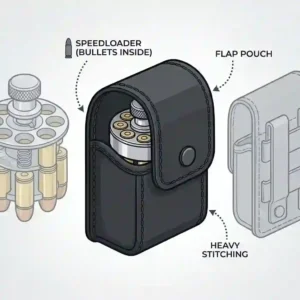
4. 5.11 Tactical Sierra Bravo Duty Pouch
The 5.11 Tactical Sierra Bravo Duty Pouch is engineered from 1680D nylon, a high-denier fabric originally developed for flak jackets (as detailed by Wikipedia’s ballistic nylon archives). This means it boasts exceptional abrasion resistance. Whether you are scraping against brick walls in an alley or sliding over the center console of a vehicle, this pouch won’t tear. It features a molded design to keep a low profile and a silent hook-and-loop closure system.
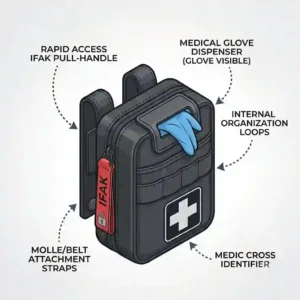
What I love about this pouch in practical application is its versatility. While it’s technically marketed as a utility pouch, it is the perfect size for a pair of medical trauma shears and a tourniquet, or two pairs of latex gloves. In today’s environment, having rapid access to basic medical gear is just as vital as your defensive tools. I’ve found that the silent closure is a massive upgrade over loud Velcro, especially during building searches where noise discipline is required. However, because it relies on friction and a flap rather than a mechanical snap, I wouldn’t trust it to hold heavy, mission-critical metal tools.
Priced in the $20 to $30 range, community feedback highlights its sleek integration with the rest of the Sierra Bravo ecosystem. Buyers love that it doesn’t add unnecessary bulk to the front of their rig. It is best suited for officers and EMTs who need a dedicated, slimline space for administrative or first-aid items.
-
Pros: 1680D nylon is nearly indestructible, low-profile design prevents snagging, silent opening mechanism.
-
Cons: Hook-and-loop closure isn’t secure enough for heavy items, limited capacity.
5. Uncle Mike’s Law Enforcement Sentinel OC Pepper Spray Pouch
The Uncle Mike’s Law Enforcement Sentinel OC Pepper Spray Pouch is a specialized carrier built from molded foam layered between durable nylon. The unique construction provides a rigid, protective shell for your Oleoresin Capsicum (OC) spray canister. This thermal insulation actually matters; leaving a pressurized OC canister exposed to extreme heat in a squad car can degrade the propellant. The Sentinel pouch helps regulate the temperature slightly, while the reinforced flap ensures the safety mechanism isn’t accidentally disengaged.
From my own field testing, the standout feature is the internal friction retention. You don’t just drop the canister in; you push it down into a snug fit. This means when you unsnap the top flap in a high-adrenaline situation, the canister doesn’t just fly out into the dirt—it waits for your hand to actively draw it. I highly recommend this for security professionals who carry Mark IV (large) canisters. Note, however, that if you carry a smaller civilian-grade spray, this pouch will be too large and the canister will rattle.
Hovering around the $20 mark, users frequently review this item as the perfect balance between accessibility and security. It offers the structure of a Kydex holster with the comfort of a soft pouch. It’s an essential, highly focused piece of gear that does exactly one job flawlessly.
-
Pros: Molded foam protects pressurized canisters, internal friction prevents drops, rugged snap closure.
-
Cons: Only fits specific canister sizes (Mark III/IV), bulky profile on the belt.
🔍 Ready to Upgrade Your Tactical Setup?
Optimizing your loadout isn’t just about looking professional; it’s about minimizing fatigue and ensuring your life-saving tools are exactly where your hands expect them to be. Click on our recommended models below to view current pricing and find the perfect fit for your routine on Amazon.
The First 30 Days: Practical Setup & Usage Guide
Buying high-quality duty belt accessories is only half the battle; how you configure and maintain them determines your street readiness. The first 30 days of breaking in a new rig are crucial for establishing muscle memory.
Step 1: The Weight Distribution Strategy
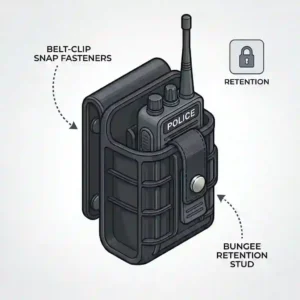
Never load all your heavy gear on your dominant side. If you are right-handed, your firearm and baton will naturally sit on your right hip. To counteract this, place your radio, handcuffs, and two spare magazines on your left side. This balanced distribution prevents the “patrol limp” and long-term sciatic nerve damage.
Step 2: The Sit Test
Once your pouches are attached, put the belt on and sit in your primary vehicle. You will immediately notice if your handcuff case is digging into your lumbar spine or if your baton holder is restricting your ability to buckle your seatbelt. Adjust your accessories laterally before you start your first shift.
Step 3: Breaking in the Snaps
Leather and AccuMold synthetic pouches come with incredibly stiff snaps. Do not use tools to stretch them. Instead, spend 15 minutes each night un-snapping and re-snapping the closures by hand, applying a tiny drop of silicone-based lubricant to the metal studs. By week two, they will be perfectly calibrated for a quick draw.
Real-World Scenarios: The Commuter vs. The Patrol Officer
Even the perfect product can fail if applied to the wrong scenario. Let’s look at two distinct profiles and how their ideal setups differ.
The Urban Patrol Officer
For an officer working 12-hour shifts in a densely populated city, retention and durability are the highest priorities. This user requires Level II or Level III retention on their holsters and covered handcuff cases like the Safariland 7904. Because they are constantly running, wrestling, and exposed to the elements, trilaminate synthetics and Kydex are mandatory. Leather will simply degrade too quickly in the rain and require too much maintenance.
The High-End Security Guard / Commuter
Conversely, consider an armed security professional working in a corporate high-rise or a hospital. The environment is climate-controlled, and the physical demands involve more walking than sprinting. For this user, a rigid synthetic rig might look overly aggressive. High-gloss leather pouches offer a more approachable, professional aesthetic. Furthermore, this user might prioritize a silent setup (using the 5.11 Sierra Bravo for utility) to avoid alarming staff while conducting patrols. In this scenario, heavy Kydex retention is overkill and adds unnecessary weight.
How to Choose the Right Setup for Your Mission
When building your loadout, the marketing jargon on a box will rarely tell you how a product feels at 3:00 AM. Here is an expert decision framework for selecting your duty belt accessories:
-
Assess Your Belt Thickness First: Most standard belts are 2.25 inches. If you buy a pouch designed for a 2-inch belt, it will not snap shut over your rig. Always measure your foundation before buying attachments.
-
Evaluate Retention Requirements: Does your agency mandate covered handcuff cases? Open-top Kydex carriers are much faster for reloading and cuffing, but they offer zero protection against an assailant trying to snatch your gear from behind.
-
Calculate the Real Estate: The human waist only has so much circumference. If you have a 32-inch waist, you physically cannot fit a gun, Taser, double cuffs, radio, baton, OC spray, and a med-kit on the outer belt. You must prioritize high-density accessories—like double-stack mag pouches or dual cuff cases—to save space.
-
Consider the Climate: According to guidelines by the National Institute of Justice (NIJ), gear degradation is a real threat. If you work in a humid, coastal environment, avoid brass snaps and natural leather, as salt air will cause them to rot and oxidize. Stick to ballistic nylon and polymer.
Common Mistakes When Building Your Rig
In my decade of field experience, I’ve seen countless rookies and veterans alike make the same critical errors when selecting duty belt accessories.
The “Overcrowding” Fallacy
The most common mistake is attempting to carry too much. Just because there is an empty two-inch space on your belt doesn’t mean you need to buy another pouch to fill it. Overcrowding restricts your range of motion. If you have to twist your torso awkwardly to reach your radio because your pepper spray is blocking your elbow, you have failed your setup.
Mixing Finishes and Materials
From an aesthetic and functional standpoint, mixing a basketweave leather belt with matte Kydex holsters and high-gloss nylon pouches looks unprofessional. More importantly, different materials break in at different rates. A nylon pouch might give way easily, while a Kydex holster remains rigid, creating an unpredictable draw stroke under stress. Pick one material ecosystem and stick to it.
Ignoring the Keepers
As mentioned earlier, treating belt keepers as an afterthought is a massive error. Using only two keepers (instead of the recommended four) allows the belt to ride up during a physical struggle. If your belt rides up to your ribcage, you lose the mechanical advantage needed to draw your tools.
Leather vs. Nylon vs. Polymer: A Material Battle
The debate over the best material for duty gear has raged for decades, but modern engineering has shifted the landscape significantly.
Traditional Leather
Leather is the classic standard. It looks incredibly professional and conforms beautifully to the body over time. However, it requires intense maintenance. You must polish it, condition it to prevent cracking, and keep it out of heavy rain. It is also the heaviest option. For ceremonial units or court officers, it remains top-tier. For daily patrol, it is becoming obsolete.
Ballistic Nylon
Nylon is lightweight, inexpensive, and breathable. It is fantastic for comfort. However, its primary flaw is structure. When you remove a magazine from a cheap nylon pouch, the pouch collapses. You then need two hands to put the magazine back in. Nylon is excellent for accessories you rarely use (like a first aid pouch), but poor for items you deploy frequently.
Polymer and Kydex (Synthetics)
This is the modern standard. Materials like Safariland’s AccuMold offer the rigidity of Kydex with the appearance of leather. They are waterproof, crush-proof, and hold their shape permanently. The trade-off is comfort; hard plastics do not contour to your hips. Therefore, precise placement is critical to avoid bruising.
Long-Term Maintenance and Cost of Ownership
When calculating the value of duty belt accessories, you must look beyond the initial purchase price. A $15 leather handcuff case might seem like a steal, but if you have to replace it every 18 months because the snap pulls through the rotting leather, its true cost is much higher.
Year One Maintenance Cycle:
-
Months 1-3: Focus on the break-in. Snaps will be stiff. Use silicone spray (never oil-based lubricants, which degrade nylon and leather) on the metal joints.
-
Months 4-6: For nylon, start checking for frayed threads at the high-friction points, specifically where the pouch rubs against the squad car seatbelt. Burn off frays with a lighter to stop unraveling.
-
Months 7-12: Inspect the retention springs. If you use a metal key clip like the Zak Tool, check the tension. If your gear begins to sag, your belt keepers have likely stretched and need replacing.
A premium synthetic rig might cost $200-$300 upfront for the belt and all pouches, but it will easily last 5 to 7 years with zero aesthetic degradation. A budget nylon setup might only cost $80, but expect to replace individual pouches annually as velcro wears out and snaps break.
Safety and Retention Regulations Guide
Before purchasing any duty belt accessories, you must understand retention levels, particularly concerning your agency’s Standard Operating Procedures (SOPs).
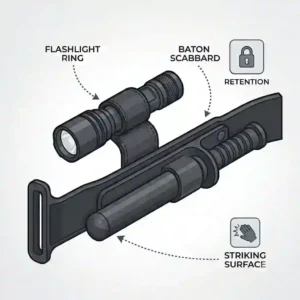
While most people understand retention as it applies to firearm holsters (Level I, II, and III), it also applies to accessories. For instance, an open-top baton holder allows for an incredibly fast draw. However, if you are running after a suspect, a standard friction-fit baton holder might allow your heavy expandable baton to bounce out.
Many agencies now require “active retention” for all lethal and less-lethal tools. This means the pouch must have a mechanical lock or a snap flap that requires manual disengagement. If you purchase an open-top Kydex handcuff carrier, ensure it features an adjustable tension screw. This allows you to tighten the friction hold so that even if you are turned upside down, the cuffs will not fall out, satisfying most compliance checks for secondary gear retention.
Conclusion
Building the perfect tactical rig is an exercise in balancing accessibility, security, and comfort. As we’ve explored, the best duty belt accessories of 2026 go far beyond simply holding your gear. High-quality components like the shape-retaining Safariland handcuff cases, the ultra-secure Bianchi keepers, and the rapid-deployment Zak Tool key rings actively enhance your operational efficiency while mitigating physical fatigue.
Remember that your belt is a cohesive ecosystem. Buying premium pouches is useless if you anchor them with weak keepers or crowd them together so tightly that you can’t reach your tools under pressure. Take the time to map out your real estate, invest in weather-resistant synthetics if you work outdoors, and meticulously test your setup in a vehicle before you ever hit the streets. Your gear is your lifeline—treat its selection with the gravity it deserves.
FAQs
❓ What are duty belt accessories?
✅ Duty belt accessories are modular attachments—like handcuff cases, baton holders, mag pouches, and belt keepers—that attach to a primary tactical belt. They securely carry and provide rapid access to essential equipment for law enforcement and security personnel…
❓ How many belt keepers do I need on a duty belt?
✅ You should use a minimum of four belt keepers. Place two in the front, spaced evenly on either side of the buckle, and two in the back, straddling the spine. This distributes weight evenly and prevents gear from sagging…
❓ Can you use WD-40 on duty belt snaps?
✅ No, you should not use WD-40. Petroleum-based lubricants can degrade nylon, synthetics, and leather over time. Instead, use a dry silicone-based spray or a specialized zipper wax to lubricate stiff metal snaps on your pouches…
❓ Are Kydex duty pouches better than leather?
✅ Yes, for daily patrol use. Kydex and hard polymers are waterproof, scratch-resistant, and retain their shape perfectly when empty, allowing for one-handed re-holstering. Leather is heavier, requires frequent polishing, and can warp if exposed to heavy rain…
❓ How thick should a duty belt be for standard accessories?
✅ Most standard law enforcement accessories are designed to fit securely on a 2.25-inch thick belt. If you use a thinner 2-inch or 1.75-inch belt, your pouches and clips may slide around unless they have adjustable belt loop shims…
Recommended for You
- 5 Best security belts for Professionals in 2026: Expert Gear Guide
- Police Duty Belt Options for 2026: 5 Elite Rigs Built for Field Comfort
- 5 Best Duty belt keepers of 2026 for Unmatched Gear Stability
Disclaimer: This article contains affiliate links. As an Amazon Associate, I earn from qualifying purchases. If you purchase products through these links, we may earn a small commission at no additional cost to you.
✨ Found this guide helpful? Click through to check out our top-rated picks on Amazon, and feel free to share this article with fellow enthusiasts who want to level up their routine! 💬🤗
[addtoany]
