
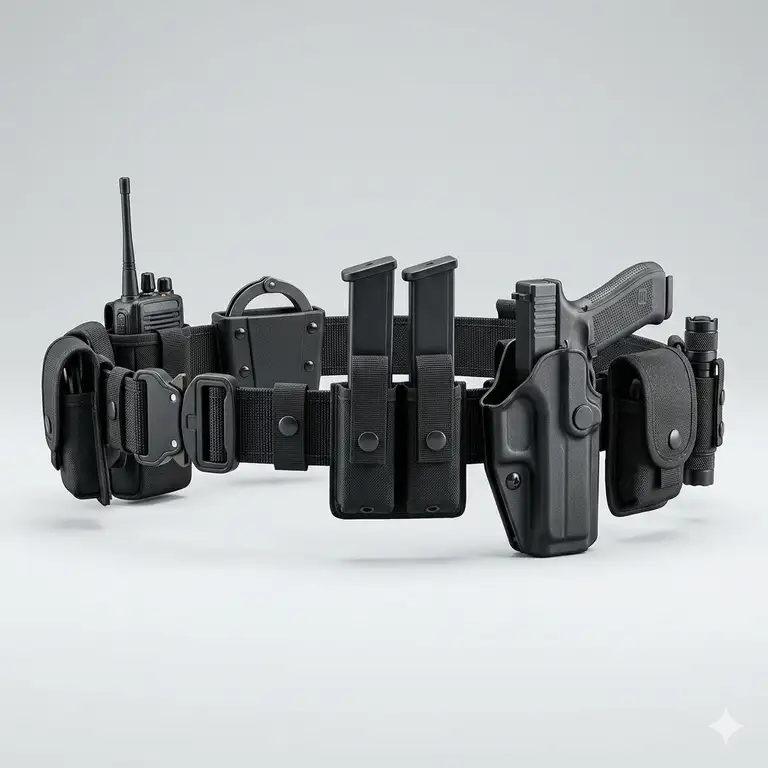
A security duty belt is a specialized, heavy-duty equipment platform worn around the waist by law enforcement, private security, and first responders to securely carry essential gear. Unlike a standard trouser belt, these systems are designed to support significant weight—often between 10 and 20 pounds—consisting of handcuffs, radios, flashlights, and defensive tools. In the professional landscape of 2026, these belts have evolved from simple leather straps into sophisticated load-bearing systems that prioritize spinal health and modularity.
If you are new to the industry, you might think a belt is just a belt. However, anyone who has pulled a twelve-hour shift at a high-traffic site knows that the wrong gear leads to “duty belt hip” or chronic lower back pain. A high-quality security duty belt acts as the foundation of your professional presence. It provides the stiffness required to keep gear from sagging and the durability to survive physical altercations or harsh environmental conditions. According to standards discussed by organizations like the National Institute of Justice, the ergonomics of equipment carry are just as vital as the equipment itself.
Choosing the right rig involves more than just picking a brand name. You need to consider material science—whether you prefer the traditional look of basketweave leather or the lightweight, weather-resistant properties of 1680D ballistic nylon. Furthermore, the buckle system is your primary fail-safe; if it can’t withstand a tug-of-war, it shouldn’t be on your waist. In this guide, we will analyze the top-tier options currently dominating the market in 2026, ensuring you find a setup that protects your gear and your body.
Quick Comparison: Top 2026 Duty Belt Systems
| Product Name | Primary Material | Buckle Style | Best For |
| 5.11 Tactical Maverick | Multi-Layered Nylon | AustriAlpin® Cobra® | High-Activity Patrols |
| Safariland Model 87 | SafariLaminate™ | Solid Brass Buckle | Formal Professionalism |
| Bianchi 7200 | Ballistic Weave | Tri-Release Polymer | Budget Reliability |
| Blue Alpha Double Belt | Dual-Layer Nylon | Hybrid Cobra® | Modular MOLLE Setup |
| Uncle Mike’s Sentinel | Webbed Nylon | Triple-Lock Buckle | Entry-Level Security |
Analysis of the Quick Comparison Table
Looking at the data above, the 5.11 Tactical Maverick stands out for users who prioritize buckle security and rapid donning, thanks to the patented Cobra buckle system. For those in corporate security or high-end residential details where a “police look” is required, the Safariland Model 87 provides that classic leather aesthetic without the maintenance headaches of real hide. If you are a budget-conscious professional just starting out, the Uncle Mike’s Sentinel offers the best price-to-performance ratio, though it sacrifices some of the long-term stiffness found in the Blue Alpha or 5.11 models.
💬 Just one click — help others make better buying decisions too! 😊
[addtoany]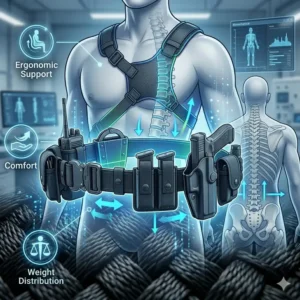
Top 5 security duty belt Systems: Expert Analysis
1. 5.11 Tactical Maverick Assaulters Belt
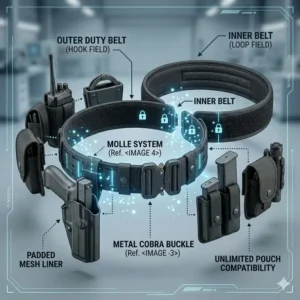
The 5.11 Tactical Maverick Assaulters Belt is a masterclass in modern tactical engineering, designed for those who don’t have time to faff around with complicated fasteners. It features a dual-belt system where the inner belt provides stability through your belt loops, and the outer duty belt attaches via a high-strength hook-and-loop interface.
Key Specifications:
-
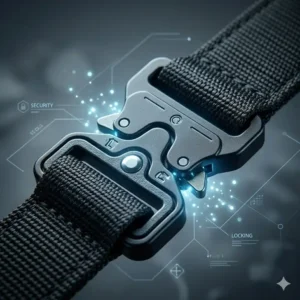
AustriAlpin® Cobra® Buckle: This buckle is virtually indestructible and won’t pop open under tension—meaning your gear stays on your waist even during a physical struggle.
-
Integrated Web Loop: Provides an emergency attachment point; while not a rappelling harness, it adds a layer of utility for tethering gear in high-wind environments.
Expert Opinion:
In my experience, the Maverick is the gold standard for patrol officers who move frequently in and out of vehicles. What most buyers overlook is the “stiffness-to-weight” ratio. Some belts are stiff because they are thick and heavy; this model uses specialized nylon weaving to achieve rigidity without feeling like you’re wearing a hula hoop made of lead. If your shift involves a lot of foot pursuit or climbing, this is your best bet.
Customer Feedback Summary:
Users consistently praise the “set it and forget it” nature of the Cobra buckle. However, some note that the inner belt can be slightly thick for certain brands of tactical pants.
-
Pros: Incredible buckle strength, very low profile, excellent weight distribution.
-
Cons: Higher price point, inner belt sizing can be tricky.
Price Range: Around $140–$160.
Value Verdict: A premium investment that pays for itself in longevity and back health.
2. Safariland Model 87 Hi-Gloss Duty Belt
For the security professional who needs to look sharp under the lobby lights, the Safariland Model 87 is the definitive choice. It utilizes SafariLaminate™, a unique material that looks like high-gloss leather but behaves like modern synthetics.
Key Specifications:
-
SafariLaminate™ Construction: This means the belt won’t scuff, peel, or crack like traditional patent leather. It’s also much easier to sanitize—a quick wipe down and it looks brand new.
-
Double-Sided Hook Lining: Optimized for use with Safariland inner belts to prevent the “gear shift” that happens when you sit down.
Expert Opinion:
The spec sheet won’t tell you this, but the real magic of the Model 87 is its “memory.” Once you break it in over the first week, it contours to your iliac crest (the hip bone) perfectly. I recommend this specifically for hospital security or corporate campus details where professional appearance is non-negotiable but physical comfort is still a priority.
Customer Feedback Summary:
Professional guards love the “parade ready” look. A common critique is that it feels very stiff out of the box, requiring a few days of wear to become truly comfortable.
-
Pros: Stunning professional aesthetic, incredible durability, resists moisture.
-
Cons: Stiff initial break-in period, buckle can be slow to adjust.
Price Range: $80–$100 range.
Value Verdict: The best “professional dress” belt on the market for 2026.
3. Bianchi 7200 Black Nylon Duty Belt
The Bianchi 7200 is widely regarded as the “workhorse” of the security industry. It’s a 2.25-inch belt that focuses on traditional nylon construction with a focus on ease of use.
Key Specifications:
-
Copi-Suede™ Lining: This internal lining creates friction against your uniform, reducing the amount of sliding your gear does throughout the day.
-
Tri-Release Buckle: Requires three simultaneous points of pressure to open, preventing accidental release or someone “unzipping” your belt during a struggle.
Expert Opinion:
What I appreciate about the 7200 is its predictability. It’s the belt you buy when you want something that “just works” without a bunch of fancy bells and whistles. It’s significantly lighter than leather alternatives, which makes a huge difference at the 10-hour mark of your shift. It’s the perfect mid-range option for general-purpose security work.
Customer Feedback Summary:
Reviewers highlight the secure buckle and the belt’s ability to hold heavy radio pouches without folding over. Some mention the edges of the nylon can be a bit abrasive against the skin if not worn with a proper undershirt.
-
Pros: Very lightweight, triple-secure buckle, excellent price point.
-
Cons: Not as stiff as premium double-belt systems, nylon can fray over years of heavy use.
Price Range: Around $65–$80.
Value Verdict: Exceptional mid-tier reliability for the everyday guard.
4. Blue Alpha Double Belt Rig
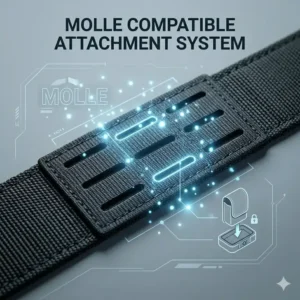
The Blue Alpha Double Belt Rig has gained a cult following in 2026 due to its minimalist design and incredible strength. It is a favorite among “tactical” security teams and those who prefer a MOLLE-compatible setup.
Key Specifications:
-
1.5″ Inner / 1.75″ Outer System: The thinner profile makes it more comfortable than traditional 2.25″ police belts while still being stiff enough to carry a full load.
-
MOLLE/PALS Compatibility: Allows you to weave pouches directly onto the belt, ensuring they never slide or shift, no matter how much you move.
Expert Opinion:
The Blue Alpha is for the “gear junkie” who wants total control over their layout. Because the outer belt is so slim, it doesn’t dig into your stomach when you bend over—a common complaint with wider security duty belt models. If you are doing executive protection or high-threat contract work where agility is key, this is the rig I’d point you toward.
Customer Feedback Summary:
Users rave about the customer service and the precise sizing. Some newcomers find the MOLLE weaving process time-consuming compared to traditional slide-on pouches.
-
Pros: Zero gear movement, very comfortable for thin builds, high-end Cobra buckle.
-
Cons: Requires MOLLE-specific pouches for best results, higher cost.
Price Range: $150–$180 range.
Value Verdict: The ultimate choice for modularity and high-speed operations.
5. Uncle Mike’s Sentinel Duty Belt
If you are looking for an entry-level security duty belt that won’t break the bank, the Uncle Mike’s Sentinel is the industry standard for rookies.
Key Specifications:
-
Webbed Nylon Construction: Provides basic rigidity at a fraction of the cost of high-tensile polymers.
-
Hook-and-Loop Adjustment: Allows for micro-adjustments if your waist size fluctuates (hey, we all love a good post-shift donut).
Expert Opinion:
Look, the Sentinel isn’t going to win any “Gear of the Year” awards, but it’s a solid, honest piece of equipment. I often suggest this for part-time security guards or those working events where they only carry a radio and a flashlight. It’s easy to clean and even easier to put on. Just be aware that if you load it down with 15 pounds of gear, you will start to see some “roll” in the nylon over time.
Customer Feedback Summary:
Many users report this was their first belt and it lasted them years. The main complaint is that the buckle is made of a plastic that feels “cheaper” than the Bianchi or 5.11 versions.
-
Pros: Extremely affordable, easy to adjust, widely available.
-
Cons: Buckle feels less robust, tends to sag under very heavy loads.
Price Range: Around $30–$45.
Value Verdict: The best “starter” belt for those on a strict budget.
✨ Don’t Miss These Exclusive Deals!
🔍 Take your professional gear setup to the next level with these carefully selected products. Click on any highlighted item to check current pricing and availability. These tools will help you maintain a professional presence and stay comfortable during those long shifts!
Practical Usage Guide: How to Set Up Your Belt for 12-Hour Comfort
Setting up your security duty belt isn’t just about sliding pouches on and calling it a day. In 2026, we have a better understanding of “Duty Belt Syndrome”—a condition where the belt compresses the lateral femoral cutaneous nerve, causing numbness in the legs. To avoid this, follow this expert setup guide.
Step 1: The Inner Belt Foundation
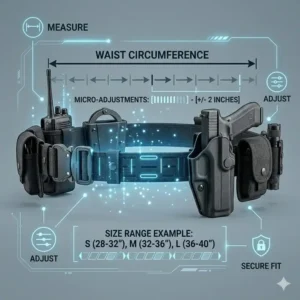
Always use an inner belt. It threads through your trouser loops and provides a Velcro surface for the outer belt to “mate” with. This prevents the belt from riding up toward your chest or sagging down your hips. Ensure the inner belt is snug but not restrictive; you should be able to fit two fingers between the belt and your waist.
Step 2: Weight Distribution (The “Balance” Rule)
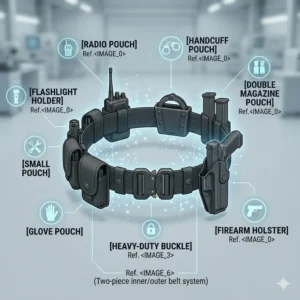
The biggest mistake beginners make is putting all their heavy gear (radio, spare mags, cuffs) on one side.
-
Heavy items: Place these toward the “10 o’clock” and “2 o’clock” positions. This keeps the weight off your hip bones and your spine.
-
The Spine is a No-Go Zone: Never place hard gear (like a handcuff case) directly over your spine. If you fall backward during a struggle, that gear can cause permanent vertebral damage. Keep the small of your back clear.
Step 3: Use Quality Belt Keepers
Belt keepers are the small loops that snap around both the inner and outer belts. Even with Velcro systems, you should use at least four: two in the front and two in the back. This ensures that if someone tries to grab your belt, they can’t peel the outer rig off your body.
Problem → Solution Guide: Solving Common Duty Belt Woes
Even the best gear can cause issues if not managed correctly. Here are the top problems professionals face and how to fix them.
Problem 1: Constant Lower Back Pain
The Solution: Switch to a “load-bearing vest” if your agency allows it, but if you must stick to a belt, invest in Back-Up Braces or duty belt suspenders. These accessories redistribute a portion of the belt’s weight to your shoulders, taking the literal pressure off your lumbar spine. Also, consider a “contoured” belt that follows the natural curve of the human waist rather than being a straight line.
Problem 2: Gear “Walking” or Sliding
The Solution: If your pouches are sliding around, you likely have a mismatch between the pouch loop size and the belt width. Most professional belts are 2.25 inches. If your pouches are 2.5 inches, use zip ties or specialized “pouch bumpers” to lock them in place. Alternatively, move to a MOLLE system like the Blue Alpha Double Belt, which physically weaves the gear into the belt.
Problem 3: The Buckle “Pinch”
The Solution: This happens when the buckle digs into your stomach when sitting in a patrol car. Look for a belt with a “low profile” buckle or an “offset” design. Some modern belts allow you to move the buckle slightly to the left or right of the center line, which can alleviate that digging sensation immediately.
Features That Actually Matter (And Those That Don’t)
When shopping for a security duty belt in 2026, marketing departments will try to sell you on “space-age” features. Here is what actually matters for your daily survival and comfort.
Stiffness vs. Flexibility
You want a belt that is vertically stiff but horizontally flexible. This means the belt shouldn’t “fold” over when you hang a heavy radio on it (vertical stiffness), but it should still be able to wrap around your waist comfortably (horizontal flexibility). If a belt is too stiff in all directions, it will feel like a hula hoop and create massive gaps between your body and the gear.
Buckle Material: Metal vs. Polymer
In 2026, high-grade polymers (like those used by Bianchi) are incredibly strong and have the advantage of being “silent.” However, for pure tensile strength—especially if you might use your belt as an emergency drag handle—nothing beats a metal AustriAlpin® Cobra® buckle. If you work in an environment with metal detectors (like an airport or courthouse), the polymer buckle is a mandatory convenience.
Lining Material
Look for a “hook and loop” lining. In the old days, we used “keepers” exclusively. Today, the combination of a Velcro-lined inner and outer belt is the gold standard for security. It ensures the belt stays exactly where you put it, which is vital for “muscle memory” when reaching for your gear in the dark.
Leather vs. Nylon: The 2026 Verdict
The debate between leather and nylon is as old as the profession itself, but in 2026, the lines have blurred thanks to synthetic laminates.
The Case for Leather (and Laminates)
Leather provides a traditional, authoritative look. It is generally stiffer and holds its shape longer than cheap nylon. However, real leather is heavy, absorbs sweat (and smells), and requires regular polishing. Synthetic laminates like SafariLaminate™ give you the leather look with the benefits of nylon—waterproof, easy to clean, and lightweight.
The Case for Nylon
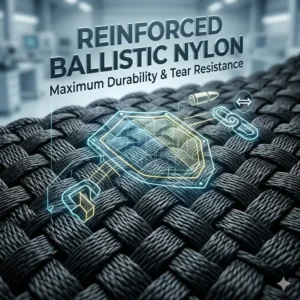
Nylon is the choice for the modern tactical professional. It’s significantly lighter, which reduces fatigue over a long week. It’s also generally cheaper and allows for MOLLE integration. The downside is that cheap nylon can look “unprofessional” or “floppy” over time. If you go nylon, ensure it is “ballistic grade” (1680D or higher) to ensure it doesn’t fray after six months of hitting the corner of your patrol car seat.
Long-Term Cost & Maintenance: Your ROI Analysis
A high-quality security duty belt is an investment in your career. Let’s look at the “Cost Per Shift.”
If you buy an Uncle Mike’s Sentinel for $35, it might last you a year before the velcro wears out or the nylon starts to sag significantly. That’s about $0.15 per shift (assuming a 5-day work week).
If you buy a 5.11 Tactical Maverick for $150, that belt will easily last you five to seven years of hard use. That brings your cost down to roughly $0.05 per shift. More importantly, the premium belt protects your back, potentially saving you thousands in chiropractic bills or lost wages due to injury. In the world of professional gear, “buy once, cry once” is a mantra for a reason.
Maintenance Tip: Never machine wash your duty belt. The agitation can break down the internal stiffeners. Instead, use a damp cloth with mild soap. For Velcro, use a “stiff brush” once a month to clear out lint and hair, which will keep the “stickiness” at 100%.
What to Expect: Real-World Performance
When you first strap on a professional-grade rig, you’ll notice two things: it feels heavy, and it feels restrictive. This is normal. A proper security duty belt is designed to become a part of your anatomy. Within two weeks, your “draw” for your radio or flashlight will become a reflexive action.
In real-world scenarios—whether you’re sprinting to a disturbance or sitting in a cramped security booth—the belt should not shift more than half an inch. If you find yourself constantly hiking your pants up, your belt is either too loose or you’re not using enough belt keepers. A well-adjusted rig should allow you to move with total confidence, knowing that even if you have to go hands-on with a subject, your equipment is exactly where it’s supposed to be.
✨ Don’t Miss These Exclusive Deals!
🔍 Take your professional gear setup to the next level with these carefully selected products. Click on any highlighted item to check current pricing and availability. These tools will help you maintain a professional presence and stay comfortable during those long shifts!
Conclusion
Finding the right security duty belt is the first step toward a long, healthy career in the security industry. Whether you opt for the high-tech modularity of the Blue Alpha Double Belt or the classic, professional sheen of the Safariland Model 87, the key is to prioritize a balance of stiffness, comfort, and buckle security. Remember, this isn’t just a piece of clothing—it’s the foundation of your safety and your professional image. By investing in a quality rig and setting it up with ergonomic principles in mind, you’re not just buying a belt; you’re buying peace of mind for every shift you work.
FAQs
❓ How tight should a security duty belt be?
✅ It should be snug enough that it doesn’t move when you jump, but loose enough that you can breathe deeply without the buckle straining. Most pros use the “two-finger rule”: if you can’t slide two fingers under the belt, it’s too tight…
❓ Can I use a regular belt as a duty belt?
✅ Absolutely not. A regular belt lacks the vertical stiffness to support the weight of security gear. Using a standard belt will cause your gear to sag, your pants to pull down, and will likely lead to chronic hip pain within weeks…
❓ Are 2.25-inch belts better than 1.75-inch belts?
✅ 2.25-inch is the standard for “heavy” loads because the wider surface area distributes weight better. However, 1.75-inch belts (like the Blue Alpha) are becoming popular for “light” or “concealed” details because they are less bulky and more agile…
❓ How do I stop my duty belt from squeaking?
✅ Squeaking usually happens with leather. Apply a small amount of silicone spray or specialized leather conditioner to the contact points where pouches meet the belt. For nylon, ensuring the Velcro is clean and tight usually solves the noise…
❓ Do I really need belt keepers if I have a Velcro belt?
✅ Yes. While Velcro is great for daily stability, it can “shear” or peel off under the extreme stress of a physical altercation. At least four keepers ensure your belt stays on your body if someone tries to pull you by your gear…
Recommended for You
- Key Clasp: 7 Top-Rated Tools for Ultimate Security in 2026!
- Patrol Belt Guide: 7 Best Options for 2026 To Boost Your Safety
- 7 Best Duty Belt Options for 2026: Expert Law Enforcement Guide
Disclaimer: This article contains affiliate links. As an Amazon Associate, I earn from qualifying purchases. If you purchase products through these links, we may earn a small commission at no additional cost to you.
✨ Found this helpful? Share it with your friends! 💬🤗
[addtoany]
