
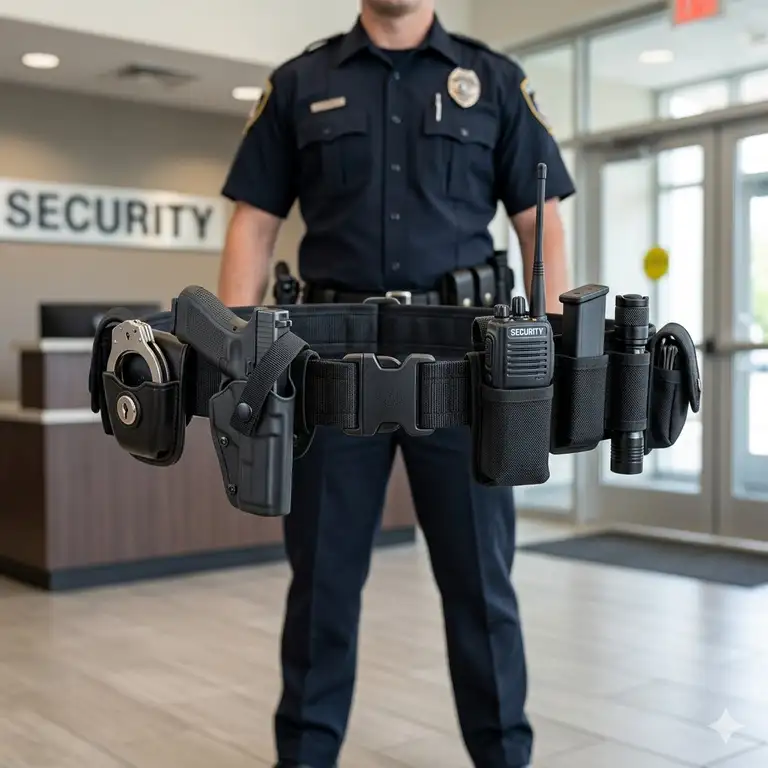
A security officer belt is much more than a simple accessory designed to keep your trousers in place; it is the fundamental foundation of a professional’s daily loadout. In the high-stakes world of private security and public safety, this specialized piece of equipment acts as a mobile workstation, distributing the weight of essential gear—such as handcuffs, radios, flashlights, and defensive tools—across the hips to ensure both accessibility and physical longevity for the wearer. Choosing the right belt is a decision that balances ergonomic health, professional appearance, and tactical readiness.
In 2026, the industry has seen a massive shift toward “smart” ergonomics and hybrid materials. No longer are we limited to heavy, rigid leather that takes months to break in. Modern security professionals are opting for advanced polymers and reinforced nylon composites that offer the structural integrity of traditional leather with a fraction of the weight. Whether you are patrolling a high-end corporate campus or managing crowd control at a stadium, your belt is the silent partner that ensures your tools are exactly where you need them when a split-second decision counts.
As we look at the current market, the integration of quick-release buckles and modular attachment systems has redefined what we expect from our gear. According to industry standards often referenced by organizations like ASIS International, the reliability of your duty gear directly impacts your operational effectiveness. In this guide, I will break down the top performers in the current market, helping you navigate the sea of marketing jargon to find a belt that supports your career—and your back—for years to come.
Quick Comparison Table: Top Duty Belts at a Glance
| Product Name | Material Type | Buckle Style | Best For | Price Range |
| Safariland Model 87 | Hi-Gloss / Leather | Double-Tongue | Formal/Executive | $90 – $120 |
| Bianchi 7960 | AccuMold Synthetic | Tri-Release Polymer | All-Day Comfort | $65 – $85 |
| 5.11 Sierra Bravo | Reinforced Nylon | Dual-Release | Tactical Utility | $55 – $75 |
| Uncle Mike’s Sentinel | Webbed Nylon | Triple-Lock | Budget/Entry Level | $25 – $40 |
| Blackhawk Molded | Cordura Nylon | Side-Release | High Durability | $45 – $65 |
Expert Table Analysis
The data above highlights a clear divide between “traditional” appearance and “modern” utility. If you are in a role requiring a high-gloss, professional aesthetic, the Safariland Model 87 remains the gold standard, though it commands a premium price. Conversely, for those prioritizing weight reduction and modularity, the 5.11 Sierra Bravo offers the best balance of modern materials and mid-range pricing. Beginners should note that while the Uncle Mike’s Sentinel is highly affordable, the webbed nylon lacks the rigid internal stiffeners found in more expensive models, which can lead to “belt sag” over long shifts.
💬 Just one click — help others make better buying decisions too! 😊
[addtoany]
Top 5 security officer belt Options: Expert Analysis
1. Safariland Model 87 Duty Belt — The Professional Standard
The Safariland Model 87 Duty Belt is the quintessential choice for officers who need a formal, “command presence” look without sacrificing structural integrity.
-
Key Specs: 2.25-inch width with a double-tongue buckle and a safari-laminate finish. In practice, this width ensures compatibility with almost every standard holster and pouch on the market, while the laminate finish prevents the scuffing common in natural leather.
-
Expert Opinion: This is the belt you buy when your supervisor is a stickler for uniform inspections. What most buyers overlook is the internal reinforcement; it is incredibly stiff, which is great for supporting a full loadout but requires a “break-in” period of about two weeks. It’s the best choice for executive protection or high-end corporate security.
-
Customer Feedback: Users consistently praise its “parade-ready” shine and the fact that it doesn’t sag even when loaded with a full-size firearm and multiple mags.
-
Pros:
-
Unmatched professional appearance.
-
Extremely rigid for weight distribution.
-
Compatible with all Safariland ELS/QLS systems.
-
-
Cons:
-
Higher price point than nylon.
-
Can be uncomfortable during long periods of sitting.
-
-
Price Range: around $95-$115. Value Verdict: A premium investment for those whose professional image is as important as their gear.
2. Bianchi 7960 AccuMold Elite — The Comfort King
The Bianchi 7960 AccuMold Elite manages to look like premium leather while utilizing a multi-layer synthetic construction that is significantly lighter.
-
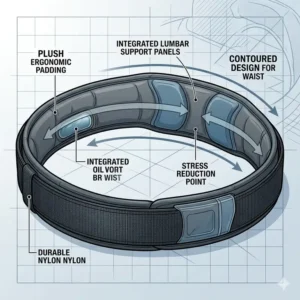
Key Specs: AccuMold trilaminate construction with a polymer Tri-Release buckle. The “trilaminate” means there is a foam core sandwiched between the outer skin and the inner lining, providing a cushioned feel against the hips.
-
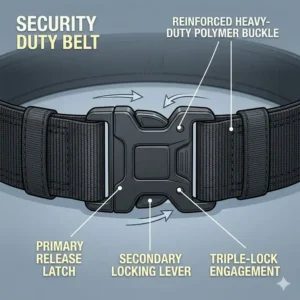
Expert Opinion: I often recommend this to officers who complain about lower back pain. The foam core acts as a shock absorber for your gear. The Tri-Release buckle is a hidden gem—it requires three distinct points of pressure to open, making it nearly impossible for an offender to snatch the belt off you in a struggle.
-
Customer Feedback: Frequent mentions of how it “saved their back” during 12-hour shifts compared to traditional leather.
-
Pros:
-
Appearance of leather with the weight of nylon.
-
Superior buckle security features.
-
Easy to clean with just a damp cloth.
-
-
Cons:
-
Synthetic finish can “crack” over several years of heavy use.
-
Buckle can be tricky to operate with thick gloves.
-
-
Price Range: around $70-$85. Value Verdict: The best mid-range option for daily patrol work where comfort is the top priority.
3. 5.11 Tactical Sierra Bravo Duty Belt — The Modular Powerhouse
The 5.11 Tactical Sierra Bravo Duty Belt is built for the modern security officer who needs a versatile, rugged, and highly customizable setup.
-
Key Specs: 1680D high-tensile nylon with a proprietary dual-release buckle. The 1680D rating indicates an extremely high abrasion resistance, meaning it won’t fray when rubbing against car seats or brick walls.
-
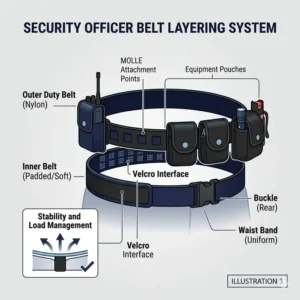
Expert Opinion: 5.11 built this for “tactical” environments. The standout feature is how well it integrates with Molle-compatible gear. In my experience, the inner/outer belt system is the best in its class, providing a rock-solid platform that doesn’t shift during a foot pursuit.
-
Customer Feedback: Officers love the “grab and go” nature of the inner-belt system and the overall durability of the nylon.
-
Pros:
-
Extremely durable 1680D nylon.
-
Includes both inner and outer belts.
-
Weather-resistant and quick-drying.
-
-
Cons:
-
Does not fit “formal” uniform requirements.
-
The buckle is plastic, which some purists dislike.
-
-
Price Range: around $60-$75. Value Verdict: Ideal for site security, construction zone monitoring, or any role where “tactical” utility beats “executive” style.
4. Uncle Mike’s Sentinel Duty Belt — The Budget Workhorse
For those just entering the field, the Uncle Mike’s Sentinel Duty Belt offers a reliable entry point without a massive financial hurdle.
-
Key Specs: Webbed nylon construction with a triple-lock buckle system. The webbed design allows for a bit more flex than the “molded” belts found higher up the price ladder.
-
Expert Opinion: This is the “Old Reliable” of the security world. While it lacks the fancy internal stiffeners of a $100 belt, it gets the job done for lighter loadouts. If you’re only carrying a radio and a flashlight, this is all you need. However, if you’re carrying a heavy firearm and multiple tools, you’ll notice some “rollover” after a few months.
-
Customer Feedback: High marks for being lightweight and very easy to adjust for different waist sizes.
-
Pros:
-
Most affordable professional-grade option.
-
Lightweight and breathable.
-
Fits most standard duty pouches.
-
-
Cons:
-
Can sag under heavy weight.
-
Less professional “presence” than leather or molded nylon.
-
-
Price Range: around $25-$35. Value Verdict: Perfect for part-time officers or those with minimal gear requirements.
5. Blackhawk Molded Cordura Duty Belt — The Rugged Alternative
The Blackhawk Molded Cordura Duty Belt sits comfortably between the budget options and the high-end synthetics, offering incredible toughness.
-
Key Specs: Cordura nylon outer with a reinforced molded core and a side-release buckle with a safety center button. Cordura is known globally for its resistance to tears and punctures.
-
Expert Opinion: What the spec sheet won’t tell you is that this belt is surprisingly quiet. Unlike leather which can “squeak” as you walk, the molded Cordura is silent—a small but vital detail for night patrols. The center-button safety on the buckle is a nice touch that adds an extra layer of retention.
-
Customer Feedback: Users report that the “molding” keeps its shape for years, preventing the belt from curling over at the edges.
-
Pros:
-
Quiet operation (no leather squeak).
-
High resistance to environmental damage (rain/snow).
-
Excellent edge reinforcement.
-
-
Cons:
-
The buckle is quite bulky.
-
Limited size adjustability compared to web belts.
-
-
Price Range: around $50-$65. Value Verdict: A solid, “no-nonsense” belt for officers working in harsh outdoor environments.
✨ Don’t Miss These Exclusive Deals!
🔍 Take your security gear to the next level with these carefully selected products. Click on any highlighted item to check current pricing and availability. These tools will help you create a professional presence your team will respect!
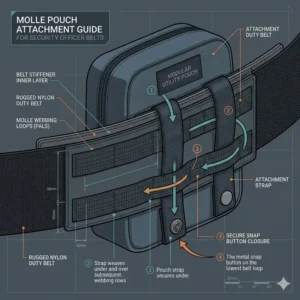
Option A: Practical Usage Guide — Setting Up Your security officer belt
Setting up your duty belt isn’t just about sliding pouches on; it’s about tactical geometry. If you don’t set it up correctly, you’ll end up with bruised hips and a radio that falls out every time you sit in a patrol car.
Step 1: The Inner-Belt Foundation
Always use a high-quality inner belt. The inner belt threads through your trouser loops, and the outer belt (your duty belt) attaches to it via Velcro or “keepers.” This prevents the heavy gear from pulling your pants down and keeps the equipment in the exact same spot every day. Expert Tip: Line up the Velcro carefully; even a small misalignment can cause “belt bite” against your skin.
Step 2: Weight Distribution
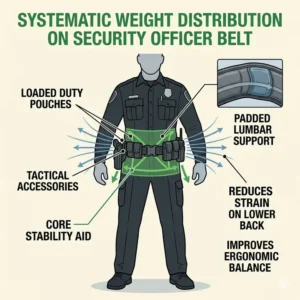
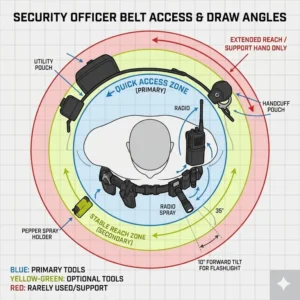
The “Golden Rule” is to keep your heaviest items—usually your firearm or radio—centered on your hips, not your lower back. Never place hard, bulky items directly over your spine. In the event of a fall, a pair of handcuffs over your tailbone can cause permanent spinal injury. This is a common safety standard emphasized by organizations like OSHA regarding workplace ergonomics.
Step 3: Use Keepers Liberally
Belt keepers are the small loops that snap the inner and outer belts together. Use at least four: two in the front and two in the back. This ensures that if someone tries to grab your belt during a confrontation, they can’t simply lift the whole rig over your head.
Step 4: The “Sit Test”
Once your gear is on, sit down in a chair or vehicle. Does your flashlight dig into your ribs? Does your radio hit the seatbelt buckle? Adjust the spacing of your pouches until you can sit comfortably without your gear shifting into an inaccessible position.
Option C: Problem → Solution Guide for Duty Gear
Problem 1: Lower Back Pain After Long Shifts
The Solution: Switch to a “padded” belt system or a trilaminate belt like the Bianchi 7960. Many officers try to “tough it out,” but the reality is that a rigid leather belt with no “give” can compress the sciatic nerve. Adding a set of duty belt suspenders (if your policy allows) can also transfer 30% of the weight to your shoulders, providing immediate relief.
Problem 2: Gear “Creeping” or Sliding Around
The Solution: If your pouches are sliding every time you run, you likely have a mismatch between your pouch loops and belt width. If you’re using a 2.25-inch belt, ensure your pouches are not 2.5-inch or 3-inch wide. For nylon belts, using pouches with “tension screws” or specialized backing like the Safariland 744BL can lock them in place permanently.
Problem 3: The “Squeaky Leather” Syndrome
The Solution: New leather or high-gloss belts like the Safariland Model 87 often squeak loudly as the leather layers rub together. To fix this without damaging the finish, apply a tiny amount of unscented talcum powder or specialized silicone spray between the overlapping layers of the belt near the buckle. Avoid using oils, as they can soften the leather and cause the belt to lose its necessary rigidity.
How to Choose the Right security officer belt
Selecting the right belt requires an honest assessment of your daily environment. Are you in a “soft” uniform (polo and khakis) or a “hard” uniform (Class A button-down and trousers)? This determines the material you should choose.
-
Assess Your Loadout: Calculate the total weight of your gear. If you carry more than 10 lbs of equipment, you must invest in a belt with an internal stiffener (polymer or steel). A basic web belt will fail within months under that much stress.
-
Verify the Width: Standard duty belts are 2.25 inches. However, some “tactical” belts are 1.75 or 2 inches. Ensure your existing holsters and pouches will fit. A 2.25-inch belt is the safest bet for maximum compatibility.
-
Buckle Security: In security work, gear retention is life. Look for “triple-lock” or “dual-action” buckles. Avoid simple side-release buckles (like those on a backpack) as they can be easily undone by an assailant during a struggle.
-
Weather Considerations: If you work in a rainy or humid climate (like Florida or the Pacific Northwest), nylon or synthetic “leather” is superior. Natural leather can absorb moisture, become heavy, and eventually mold if not treated meticulously.
Common Mistakes When Buying a security officer belt
The most frequent mistake I see new officers make is buying a “regular” belt and trying to use it for duty work. A standard CCW (Concealed Carry) belt is usually 1.5 inches wide. While strong, it won’t support the weight of a full duty loadout and will cause your pouches to “flop” outward, making them hard to reach and potentially dangerous.
Another pitfall is ignoring the “inner belt” system. Many budget-conscious buyers skip the inner belt and just slide the duty belt through their pant loops. This is a recipe for disaster. Duty belts are too thick for most pant loops, leading to broken loops and a belt that won’t stay cinched. Always buy a “system” (Inner + Outer) for maximum stability.
Lastly, don’t buy for “looks” over “function.” A high-gloss belt looks amazing, but if you spend 10 hours a day crawling under equipment or patrolling construction sites, that finish will be ruined in a week. Match the material to the mission.
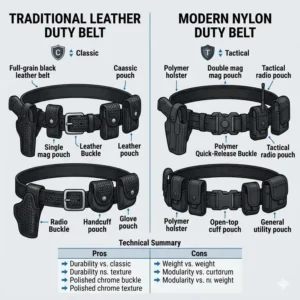
Nylon vs. Leather: The Great Debate
| Feature | Reinforced Nylon | Traditional Leather |
| Durability | High (Abrasion Resistant) | Very High (Puncture Resistant) |
| Maintenance | Low (Soap & Water) | High (Polishing/Conditioning) |
| Comfort | Instant (More Flex) | Requires Break-in Period |
| Professionalism | Tactical/Modern | Formal/Executive |
| Weight | Very Light | Heavy |
Analysis of Materials
While leather used to be the only game in town, modern reinforced nylon has largely taken over the patrol market. Nylon is significantly lighter, which reduces fatigue over long shifts. However, leather (and high-quality synthetics like the Safariland Model 87) still wins in the “Professionalism” category. If your role involves interacting with high-net-worth clients or performing ceremonial duties, leather is non-negotiable. For everyone else, the weight savings of nylon are usually the smarter choice.
Features That Actually Matter (And Those That Don’t)
When browsing for a security officer belt, you’ll see a lot of marketing fluff. Here is what actually impacts your performance:
-
Internal Stiffeners: This is the most important feature. It’s a plastic or metal “spine” inside the belt. Without it, the belt will fold under the weight of your gear.
-
Velcro Lining: A full-length Velcro lining on the inside of the belt allows it to “mate” with your inner belt. This is essential for preventing the belt from riding up or down.
-
Rounded Edges: Look for belts with “edge binding.” Sharp edges on a stiff belt will dig into your hips and ruin your uniform shirts.
-
Adjustability: Your waist size changes depending on whether you’re wearing a winter jacket or a summer polo. A belt with at least 2 inches of adjustment is vital for year-round comfort.
What doesn’t matter? “Designer” buckles or “quick-detach” systems that aren’t load-rated. If a buckle looks cool but hasn’t been tested for retention, it’s a liability.
Safety and Regulations Guide
Before purchasing your security officer belt, consult your company’s SOP (Standard Operating Procedure). Many large security firms, such as Allied Universal or G4S, have strict requirements regarding belt color (usually black) and material (usually leather-look or plain nylon).
Furthermore, ensure your belt meets the weight-bearing standards for the gear you are required to carry. While there is no official “NIJ Rating” for belts, many follow the guidelines set by The National Institute of Justice regarding the durability of police equipment. Using unrated, “fashion” belts for security work can lead to liability issues if a piece of gear falls off and causes an accident or injury.
✨ Don’t Miss These Exclusive Deals!
🔍 Ready to upgrade your loadout? Click any of the product names above to see current availability and pricing. Secure your gear today and experience the difference a professional-grade belt makes on your next shift!
Conclusion
Finding the perfect security officer belt is a balancing act between professional requirements and personal comfort. Whether you choose the high-gloss prestige of the Safariland Model 87 or the tactical versatility of the 5.11 Sierra Bravo, the key is to prioritize a rigid foundation and an ergonomic setup. Remember, your belt is the most used piece of equipment in your arsenal—it supports your gear every second you are on the clock. Investing in a high-quality “system” (inner and outer belt) will pay dividends in your comfort, safety, and professional appearance.
FAQs
❓ What is the standard width for a security officer belt?
✅ The industry standard is 2.25 inches. This width is designed to fit standard duty pouches and holsters while providing enough surface area to distribute the weight of the gear across your hips effectively…
❓ Can I use a regular 1.5-inch belt for security work?
✅ It is not recommended. A 1.5-inch belt lacks the vertical stability to hold heavy gear upright. Your pouches will tilt outward, creating a safety hazard and making it difficult to draw your tools quickly…
❓ How do I clean a nylon duty belt?
✅ Most nylon belts can be cleaned with mild soap, warm water, and a soft brush. Avoid using harsh chemicals or bleach, as these can break down the nylon fibers and weaken the belt’s structural integrity…
❓ Why do I need belt keepers?
✅ Belt keepers lock your outer duty belt to your inner trouser belt. This prevents the gear-heavy belt from shifting during physical activity or being pulled off by an assailant during a struggle…
❓ Is leather better than nylon for back pain?
✅ Generally, no. Nylon is lighter and often has more “flex,” which is better for back health. However, a high-quality “molded” belt (nylon or synthetic) with proper weight distribution is the best solution for pain…
Recommended for You
- 5 Best security belts for Professionals in 2026: Expert Gear Guide
- 5 Best security duty belt Options for 2026: Expert Duty Gear Guide
- Patrol Belt Guide: 7 Best Options for 2026 To Boost Your Safety
Disclaimer: This article contains affiliate links. As an Amazon Associate, I earn from qualifying purchases. If you purchase products through these links, we may earn a small commission at no additional cost to you.
✨ Found this helpful? Share it with your friends! 💬🤗
[addtoany]
